
[#51] Marty Supreme - The Subversion of the Sports Drama

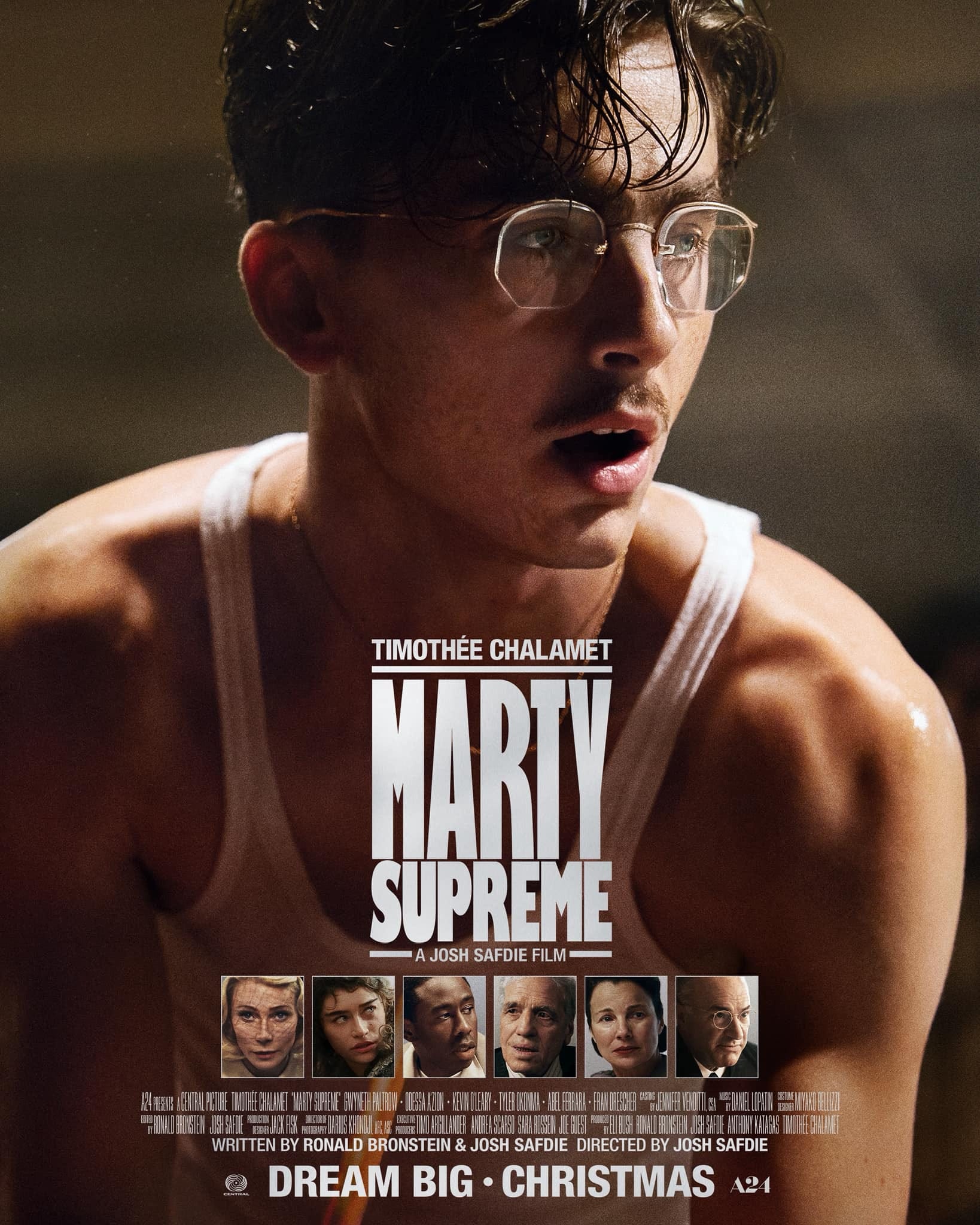
MARTY SUPREME
Marty Supreme, along with Hamnet, is one of the frontrunners to win the Oscar this year. It’s received nine nominations at the 98th Academy awards, which include the Best Picture and Best Director, and Best Actor. It’s also earned three nominations at both the 83rd Golden Globe Awards and 32nd Actor Awards. Timothée Chalamet, who plays Marty Supreme, won a Golden Globe Award and a Critics Choice award for his performance.
THE PLOT
Marty Supreme is loosely inspired by the life of American table tennis player Marty Reisman. Marty Mauser is a shoe salesman in a family run store, in 1952 New York. he dreams of winning the British Open, in a country that doesn’t consider Table Tennis to be a national sport yet. The film follows a sequence of events in the life of Marty’s life, who believes that he is destined for the Table Tennis Hall of Fame.
I think the real clue that no one knows what to make of this film is the variety of introductions that different publications noted for this film.
Newstalk: “Marty Mauser, a wily hustler with a dream no one respects, goes to hell and back in pursuit of greatness.”
Outlook India: “In Josh Safdie’s whip-smart, endlessly enthralling Marty Supreme, ambition is exaggerated, derided and capitalised. As Chalamet’s Marty Mauser steamrolls his heedless way towards ping-pong conquest, it’s to view ambition being corroded as well as the ground beneath crumble.”
Deccan Herald: “It explores the multiple layers of an American table tennis player in his quest for excellence — the heights and depths, the hope and despair, and the dreams termed delusional.”
And here’s mine: A deranged conman and athlete, Marty Mauser, desperate to fund his journey to the 1952 Table Tennis World Championships, executes a series of lunatic plots to obtain money, that spiral steadily out control. By the end of the film, a German Shepherd has been kidnapped, a gas station has been set on fire, a pregnant woman carrying his child has been shot, and an armed robbery has taken place.
Marty Supreme has resulted in two split camps; one camp believes that the story is an absolute mess of filmmaking and has emerged from the theatre outraged, and the second camp is full of praises for Chalamet’s performance. There’s no in-between. One doesn’t bleed into the other.
THE SUBVERSION OF THE SPORTS DRAMA
When I went to see this film, I was expecting a clean sports drama, the way F1 operated. I went into the theatre, expecting a classic underdog sports movie. Certainly, that’s what the marketing communicated: that Marty is a man with a dream, and with circumstances that outweigh that dream. But the burning coals of his desire and grit would, in a classic sports movie, make him a vortex that even destiny is pulled into. Unlikely allies would manifest, naysayers would turn staunch friends, and the film would culminate in Marty winning the Table Tennis Championship, and proving to everyone that he was right.
This is not that film.
Marty Supreme is a confusing, anxiety inducing drug trip nightmare. Cinematography wise, it is characterised by closes, with rapid dialogues being fired, akin to the way a ping pong match is played. Anxiety inducing cinema is the cornerstone of John Safdie’s filmmaking - he and his brother co-directed the 2019 film Uncut Gems, which was designed to mirror a panic attack - but in this film, it’s more than just a personal signature.
When I broke down the film, I realised that at at every single point where Marty’s underdog braggadociousness should impress or win over a naysayer or a doubter in a classic sports drama fashion, it turns them off. So rather than coming across as a man poised on the cusp of greatness, Marty comes across as cocky, irritating, and just plain ridiculous. As he boasts, you can see exhaustion and disgust cloud the other person’s face, which in a film like F1, or Remember the Titans, would have resulted in belief and confidence in Marty’s ability and greatness.
Marty is rude and impulsive, rather than earnest, be it when he sits opposite the moghul Norman Rockwell, trying to convince him that he should take a chance on him, or he’s trying to convince a table tennis official to put his name in the tournament draft. Or even when he’s speaking to the only friend who believes in him. At every point where he has the choice to come across as a person someone would be willing to take a bet on, Marty comes across as supremely unlikeable and difficult to feel sympathetic for.
When his grandfather declines to lend him money to fly out for the table tennis championships, Marty proceeds to execute a sequence of increasingly deranged plots to put together the money required for the flight and lodgings for the tournament. These plots include a tryst with veteran actress Kay Stone, an abducted German Shepherd. Requests for money turn into blackmail, which then turn into armed robbery and a shootout at farm. In fact, other than the beginning and the end of the film, very little in the film has to do with ping pong.
FILMS AS A CHARACTER STUDY
Films that operate as character studies are films more interested in exploring personality and emotions, rather than furthering the plot. ‘Serious’ actors love these kinds of films, because it lets them explore range. Most of these actors have openly spoken about how they hate plot, because it limits the freedom to explore the full nuances of a character. These are also the films that win their actors Oscars; a great amount of weightage is given to prep and method.
Although mounted as a sports movie, Marty Supreme isn’t a sports drama, or even a sports comedy, as much as it is part character study and part subversion. Which is why I think Timothee Chalet decided to play it in the first place. He’s on the hunt for his first Oscar, and Oscars aren’t given to commercial stuff.
More’s the pity.
Marty is a classic random variable. He walks through the world like he’s invincible, and he thinks that because he has some talent, he is owed the world. Character study aside, if you think of this from the perspective of subversion, the film actually makes sense in a demented kind of way. Because essentially, the buy-in that a sports drama takes from its audience is that this person’s talent and circumstance makes them deserving of fame and accolades. So even crackpot schemes - though none as deranged as the ones in Marty Supreme - are forgiven, and we, as the viewer, would see this as evidence of their great ambition and desire.
But Marty isn’t portrayed as a misunderstood genius. He is reckless, entitled, and the film refuses to redeem him simply because he has some skill or he wants greatness badly enough. His attempts to win are framed as pathetic, rather than glorious. He is more conman than athlete, and the film is less about table tennis, and more about ego and obsession.
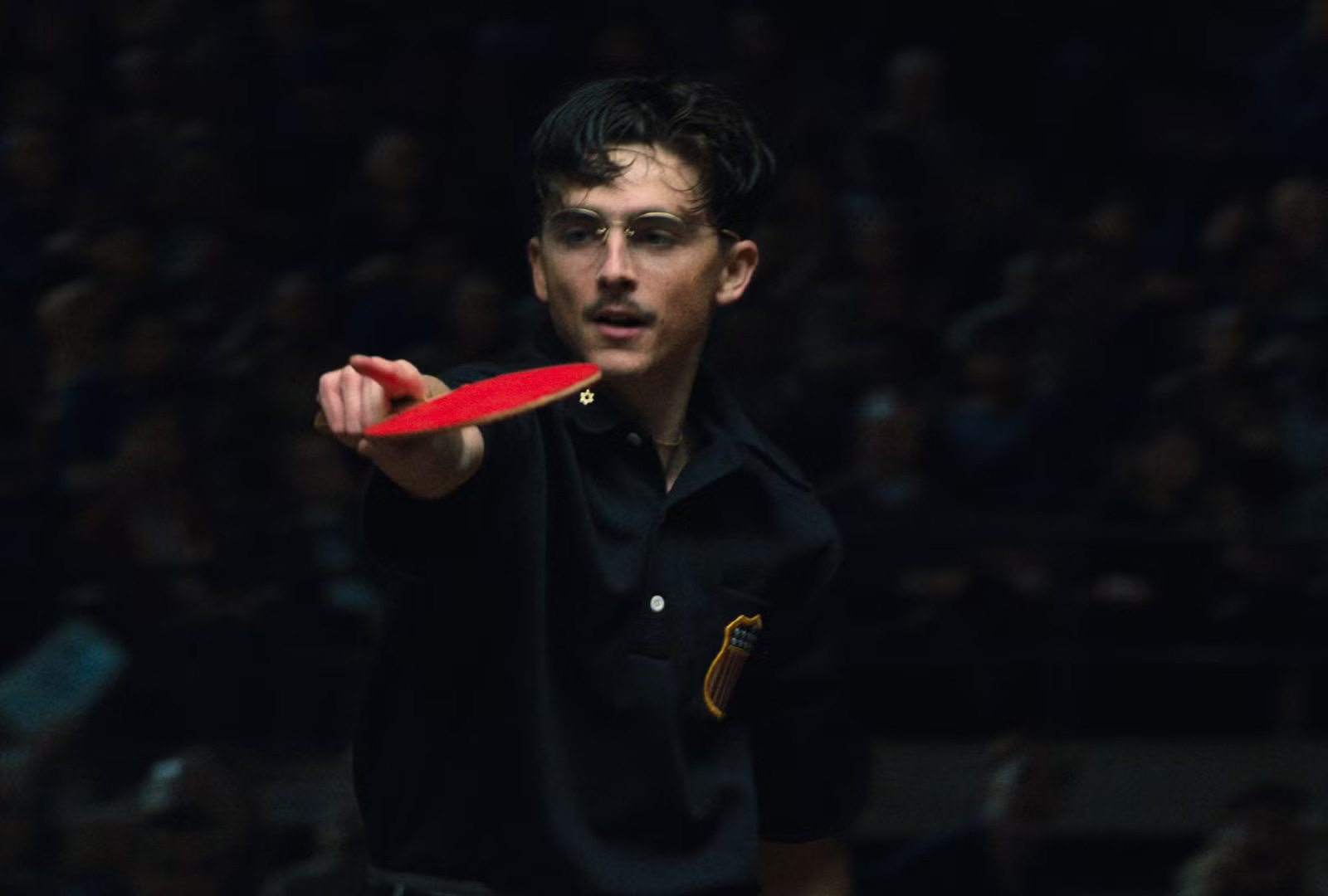
Timothee has spoken openly about how he trained for seven years to make this film. This film was put into development as early as 2018, which was when he was approached, and started filming in September 2023. And while his acting as the chaotic, incorrigible Marty Mauser is great, I don’t know why he spent 7 years training for table tennis, since there are only two matches in the film.
CONCLUSION
I wouldn’t say that Marty Supreme is confused about what it wants to be. I would say that it is deliberately subverting the genre it wants to occupy. Seen from a certain lens, it is an underdog film, because despite Marty being so overly confident, the truth is that he is at the mercy of the world, of the moghul, of the table tennis official. However, none of these moments deliver the emotional payoffs that a sports movie promises. Rather, we get something else entirely.
It’s a film that can be unpacked and appreciated for the technique. But it was not a fun watch, nor was it an enjoyable watch. Rather, it’s a film that I’d watch to study for craft and genre.
Take it easy. You get paid for this over analyzed crap ? Can't you simply enjoy the film for what it is: a shining moment for TS, and a delightful primer on Jewish NYC in the 50's. Jesus H, when did reviewing a film come down to a surgical procedure?!?!?!